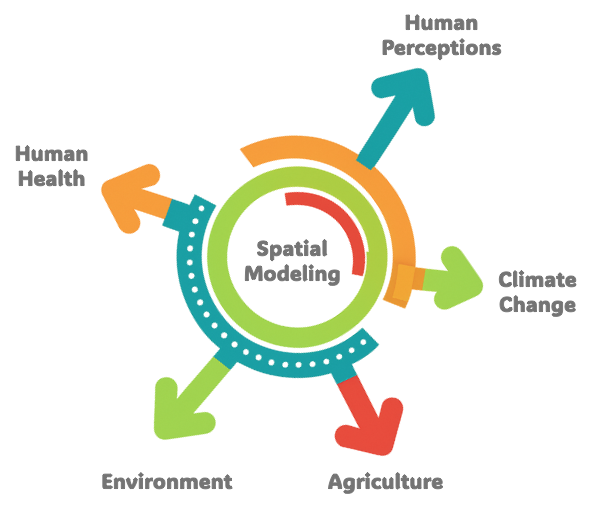
Our research efforts focus on individual hypotheses around human and animal health, agricultural processes, and climate change. In addition, some of our work intersects these areas, where we construct more transdisciplinary methodologies. The connecting factor to all these areas is the use of machine learning and spatiotemporal modeling to understand variations and influences across space and/or time. Below are more specifics on each of the areas of focus.
If you interested in our research efforts, and would like to participate, please use the button below to send us an informational request, and we will respond as soon as possible.
HUMAN HEALTH MODELING
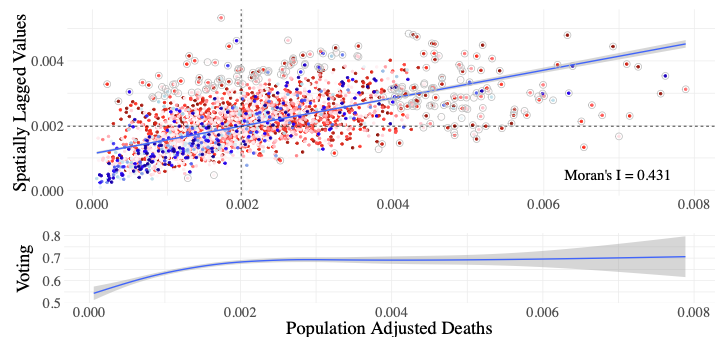
HACLab’s human health modeling research uses spatial, spatiotemporal, and machine-learning methods to examine geographic patterns in health, development, and disease. Current work includes BRFSS-based population health modeling, child development research, and COVID-19 modeling, with an emphasis on understanding how environmental, social, and behavioral factors contribute to health outcomes and disparities. This work aims to produce interpretable, place-based insights that can support public health planning, identify vulnerable populations, and guide more targeted interventions.
project Area: Behavioral Risk Factors Surveillance System (BRFSS) Modeling
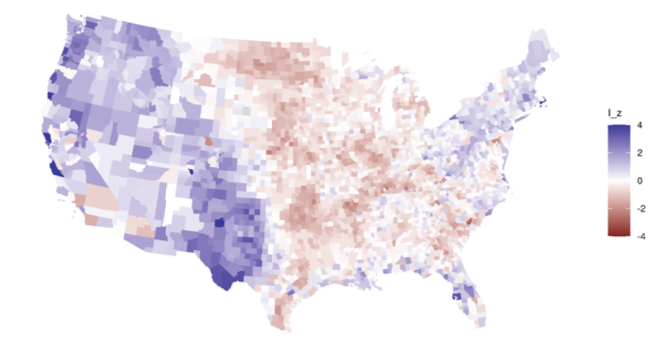
Often times, public health interventions and evaluations lack scientifically sound baseline data due to sampling methods and sparsely populated counties. One standard solution is to collapse several years of data to reach a direct measure. This method does not allow, however, for rigorous evaluation of intervention impacts. Our modeling approach focuses on combining sparsely collected health data and developing modeling techniques which allow us to temporally and spatially refine this data. We then use the resultant data in additional machine learning models, which focus on more complex health-related issues, which may be associated with other areas, including: economics, the environment, social outcomes, and food security. Our work provides regional and state public health agencies, as well as other health organizations, with baseline county level data never available before. These county level data can aid policy leaders, funders, researchers and public health decision makers in their efforts to assess, improve, and monitor health across the United States. Our BRFSS modeling work uses population synthesis and microsimulation techniques to estimate health indicators at a county level. Our recent focus has been on applications to data for the state of Idaho – but our ongoing research is exploring alternative regions, additional health indicators, and differing techniques (geographically weighted regression, simulated annealing) to improve performance. Our work on this effort can be viewed at https://modelingidahohealth.org. Current human health modeling projects include:
Current Projects
- Nationwide BRFSS Modeling and associations with Health and Perception: We have a line of active research that is applying spatial microsimulation approaches nationwide, and integrating this into a long-term research study to examine associations of climate with human health, as well as mediation/moderation models associated with human perceptions of climate change. Our initial efforts are focused on the State of Texas and other southern states.
Past Projects
- BRFSS modeling for the State of Idaho: in 2019, we developed an iterative proportional fitting (ipf) modeling approach to downscale health district level data (obesity, overweight, diabetes) to a county level, for the state of Idaho. See our Fall 2021 presentation to the state of Idaho. We additionally have a 2023 paper on our work: “Estimating county level health indicators using spatial microsimulation” in Population, Space, and Place.
- BRFSS COVID-19 health disparities microsimulation: Expanding on our previous work, this project uses spatial microsimulation/iterative proportional fitting to estimate a wide range of health parameters that are associated with COVID-19. Results of this project can be found at our https://modelingidahohealth.org site.
- BRFSS Modeling and COVID-19 Indicators Modeling: Our BRFSS COVID indicators project, which starts in 2022, expands upon our microsimulation of BRFSS data to construct COVID-19 indicators which can then be used to model and predict COVID-19 fatality rates, deaths, and cases.
- Idaho Tobacco Modeling: Our team has a multi-year project, funded by the state of Idaho, to examine tobacco usage using 2021 BRFSS data.
project Area: Child Development Modeling
Current Projects
- Modeling EEG outcomes in association with child development. In conjunction with research conducted by Dr. Masha Gartstein @ Washington State University, we are constructing machine learning models which parse out behavioral mechanisms in association with EEG signals. We have a PLoS ONE paper from 2022 on this topic.
- Maternal and Infant Health. We are applying our spatial machine learning and microsimulation techniques to examine maternal health and its relationships to climate, environmental factors, and other variables, including religiosity. We leverage our aforementioned with with the CDC’s BRFSS, as well as the CDC’s Pregnancy Risk Assessment systems (PRAMS) that are run by states.
Past Projects
- Modeling EEG outcomes in association with child development. In conjunction with research conducted by Dr. Masha Gartstein @ Washington State University, we are constructing machine learning models which parse out behavioral mechanisms in association with EEG signals. We have a PLoS ONE paper from 2022 on this topic.
Project Area: COVID-19 Modeling
Current Projects
- Integrating Spatial Modeling Approaches for Social Determinants of Health. Leveraging existing COVID-19 modeling to apply novel spatial weighting techniques to explore variability of diabetes and obesity and their relationships to nuanced factors of sociodemographics, political ideology, and non-pharmaceutical interventions.
Past Projects
- Examining aspects of trust and risk in regards to COVID-19 deaths. Utilizing a multi-state survey of COVID-19 perceptions (from 2021) we have constructed a structural equation modeling (SEM) methodology to explore the effects of latent risk and trust variables, and their effects on deaths. We have a PLoS ONE paper from 2022 on this topic.
- Using elastic net regression to examine socidemographic factors related to COVID-19 – published 2024 in PLoS One https://doi.org/10.1371/journal.pone.0297065
- Modeling spatial relationships of covariates in relationship to COVID-19 deaths: We are currently engaged in research to spatially model demographic and comorbidities in relationship to deaths – using geographically weighted random forest approaches. We have a paper under review at BMC Public Health: https://doi.org/10.1101/2023.07.21.23292785
AGRICULTURE, FOOD SYSTEMS AND CLIMATE RISK
HACLab’s agriculture, food systems, and climate risk research examines how weather variability, climate extremes, and environmental change affect agricultural production, economic losses, and the resilience of food systems. Current work integrates spatial modeling, machine learning, remote sensing, and insurance-loss data to identify geographic patterns of vulnerability and support more adaptive, climate-resilient agricultural decision-making.
Current Projects
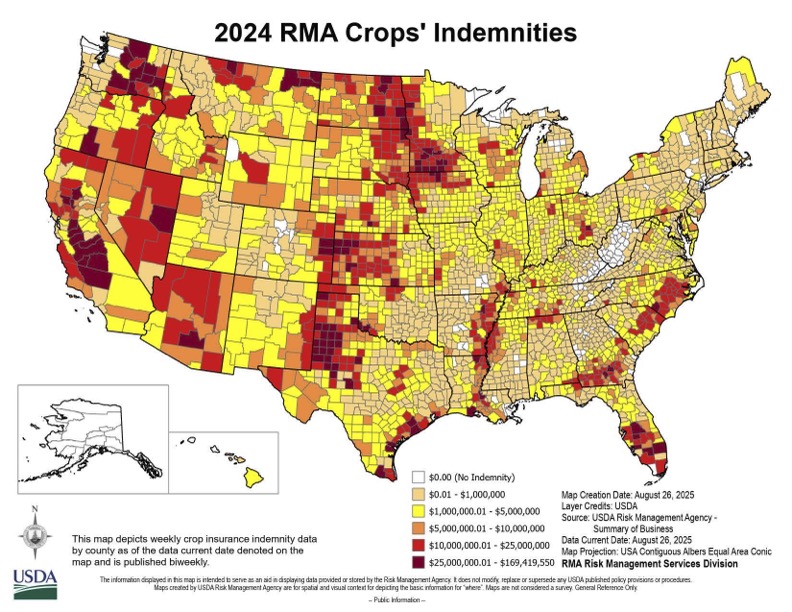
- Nationwide Agricultural Insurance Loss Modeling across all commodities.. This research expands upon our existing insurance loss research to expand predictive models to many commodities, nationwide. Leverages spatially weighted random forest modeling with temporal integration.
Past Projects
- Climatic random forest modeling of agricultural insurance loss. This research looks at relationships of climate on insurance loss filings, across the Inland Pacific Northwest (iPNW). We currently have a 2022 paper in Environmental Data Science that addresses this subject.
- Exploration of climate effects on aphids in the PNW. In collaboration with researchers in the University of Idaho’s College of Agricultural Sciences, this work models associations of climate with aphid diversity across multiple years. We have a 2022 paper in the Journal of Economic Entomology that discusses this research.
CLIMATE AND HUMAN PERCEPTIONS
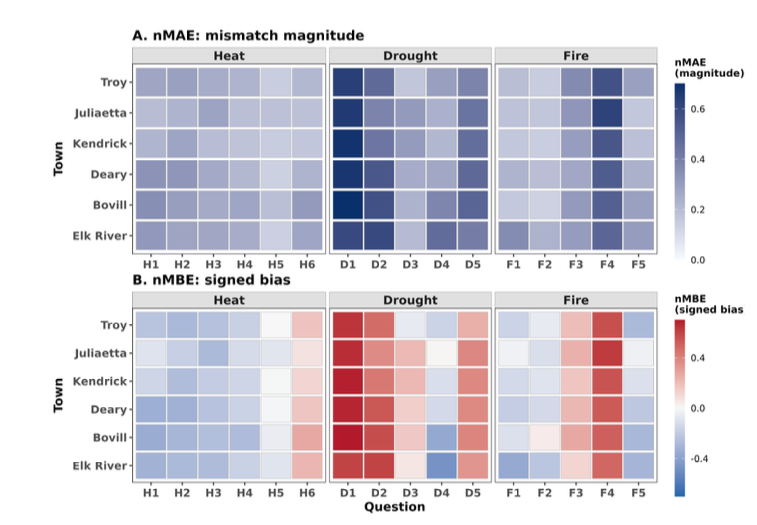
HACLab’s climate and human perceptions research examines how people understand, experience, and respond to climate variability and environmental change. This work combines survey data, climate observations, spatial analysis, and statistical modeling to compare perceived and measured conditions, identify geographic differences in climate awareness, and better understand how local experiences shape attitudes, risk perceptions, and adaptation.
Current Projects
- The University of Idaho’s ICREWS project (https://idahocrews.org) is a $24 million NSF EPSCoR research project that aims to address the impact of climate, population, and technological change on energy-water (E-W) systems. HACLab team member are working to develop alternative scenario spatiotemporal visualizations.
- Where We Live (https://wherewelive.org) is a 5 year EPSCoR Track 2 project (co-PI Seamon) is an interdisciplinary and cross-jurisdictional collaboration intended to change the way people tackle adaptation to climate-induced changes. Funded by the National Science Foundation, the project addresses climate resilience and sustainability, particularly in rural, underserved communities at high risk from climate-induced change. Using analytical social science and other computational tools, this project aims to advance our understanding of the factors, patterns, and mechanisms of resilience to climate-induced changes — with the goal of discovering how adaptation actions can produce community-scale resilience.
- Nationwide Climate Modeling in comparison to Human Perceptions. This work is derivative of our Where We Live project, but focuses on existing survey data provided by the Yale School of Climate Communications. Our approach is to apply ensemble modeling techniques to explore the varied relationships of climate perceptions in conjunction to other sociodemographic, economic, or social vulnerability factors, over space and time.
DATA CENTERS AND ENVIRONMENTAL ANALYSIS
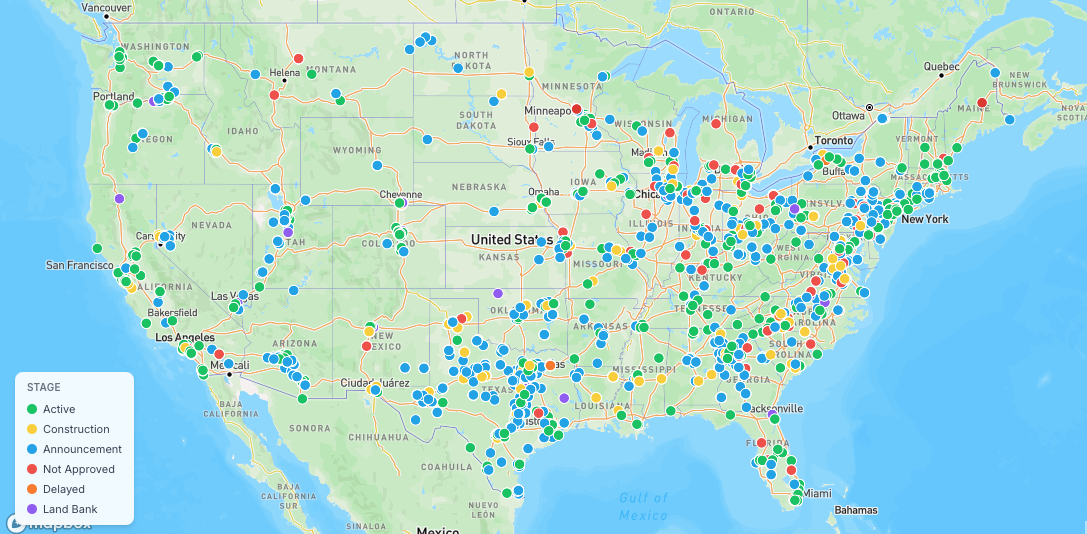
HACLab’s data center analysis research examines the environmental, infrastructural, and community impacts of rapidly expanding digital infrastructure. This work uses spatial analysis, climate and resource data, and computational modeling to evaluate patterns of energy and water demand, site suitability, environmental risk, and potential effects on surrounding communities. This is a new area of exploration: we have several preliminary projects that involved Texas specific aspects as well as nationwide analysis.
SPATIOTEMPORAL MODELING DEVELOPMENT
HACLab develops advanced spatiotemporal modeling approaches to understand how environmental, climatic, health, and social processes vary across space and change over time. Our research integrates spatial statistics, machine learning, geographic information systems, and large geospatial datasets to identify geographic patterns, local relationships, and emerging trends that conventional models may overlook. A major focus is the development and application of interpretable, geographically sensitive methods that account for spatial dependence, temporal dynamics, and regional variability. These tools support research across climate science, human health, agriculture, environmental risk, and community decision-making.

CLIMATE EXTREMES, DROUGHT, HEAT, AND FIRE WEATHER
HACLab investigates the causes, patterns, and impacts of climate extremes, with a particular focus on drought, extreme heat, and fire weather. Our research combines climate observations, remote sensing, spatial analysis, and advanced statistical and machine-learning methods to examine how these hazards vary across regions and change over time. We study both individual extremes and compound events, including the ways prolonged drought and high temperatures can intensify fire-weather conditions and increase risks to ecosystems, agriculture, infrastructure, and communities. This work supports improved climate-risk assessment, environmental planning, and adaptation decision-making.